Looking at a charming older home in Alameda and wondering what you are really buying? In this city, architectural style is not just about curb appeal. It can shape how a home lives, what kind of upkeep it may need, and how much flexibility you may have if you want to remodel later. If you are thinking about buying a historic home in Alameda, understanding a few key styles can help you make a smarter decision. Let’s dive in.
Why Alameda’s historic homes matter
Alameda has an unusually deep stock of older homes. According to the City, it has more than 10,000 buildings constructed before 1930, and buildings constructed before 1942 are subject to the State Historical Building Code whether or not they appear on the local study list.
That matters because historic homes in Alameda often come with a different planning and permitting context than newer properties. The City has had a Historic Preservation Ordinance in place since 1975, and some work on historic properties may require a Certificate of Approval in addition to a standard building permit.
For you as a buyer, the key takeaway is simple: style affects more than appearance. It can influence future repairs, renovation costs, and the review process for exterior changes.
What buyers should notice first
When you tour an older Alameda home, try to look past staging and finishes. The City’s design guidance describes architectural style through a home’s form, roof shape, windows and doors, materials, and decorative elements.
That means you should pay attention to the bones of the house. A broad porch, low roofline, symmetrical facade, or recessed windows can tell you a lot about the home’s original style and how the City may view future exterior changes.
In Alameda, exterior work is often more regulated than interior work. Significant window and siding changes generally require design review, while some minor in-kind or visually consistent replacements may be exempt. Paint-only changes are generally outside design review, and re-roofing without structural alteration is also typically exempt.
Victorian homes in Alameda
How to recognize Victorian style
Victorian is the oldest predominant style still found in Alameda. The City groups several subtypes under this category, including Gothic Revival, Italianate, Second Empire, Stick, Queen Anne, and Shingle.
You will often see asymmetrical shapes, varied roof forms, tall vertically proportioned windows, decorative shingles, brackets, spindlework, turrets, and cutaway bays. These homes usually make a strong first impression from the street.
How Victorian homes usually live
Victorian homes often feel more vertical and compartmentalized than later styles. You may notice a pronounced entry sequence, taller proportions, and rooms that feel more distinct from one another instead of part of one open plan.
That can be a plus if you like separation of space and historic detail. It can be more challenging if you want a simpler path to major layout changes or large-scale additions.
What to know about upkeep
Victorian homes tend to be detail-heavy, and those details matter. Wood siding, trim, porches, and original windows all play a big role in the home’s character.
In Alameda, original windows are considered important to preserving charm, character, and resale value. Material substitutions such as changing wood siding to stucco or vinyl are more likely to raise design review issues, so buyers should plan carefully before assuming exterior updates will be straightforward.
Colonial Revival homes in Alameda
How to recognize Colonial Revival style
Colonial Revival homes are usually easier to spot once you know the pattern. The style often features simple volumes, symmetrical facades, rectangular or square proportions, raised ground floors, entry porches, bay windows, cornices, and classical details like columns or entablatures.
Compared with Victorian homes, these houses often look more orderly and restrained. The overall effect is balanced rather than ornate.
How Colonial Revival homes usually live
Colonial Revival homes often feel more formal in layout. Front entries are usually clearly defined, and the room arrangement can feel more structured and symmetrical.
For buyers, that can translate into a house that feels intuitive and easier to navigate. It may also make some modest adaptations easier than in a highly ornamental Victorian, though Alameda still expects additions to preserve the home’s original proportions and street presence.
What to know about upkeep
One practical advantage of Colonial Revival homes is their simpler massing. Because ornament is often more restrained, they can sometimes be easier to maintain and adapt than more decorative styles.
Even so, Alameda expects new windows, trim, and exterior materials to match the original building’s proportions and dominant materials. If you are planning visible exterior work, details still matter.
Craftsman homes in Alameda
How to recognize Craftsman style
Craftsman homes became very popular in Alameda between 1900 and 1930. The style marked a shift away from heavily ornamental Victorian design and toward natural materials and a more grounded look.
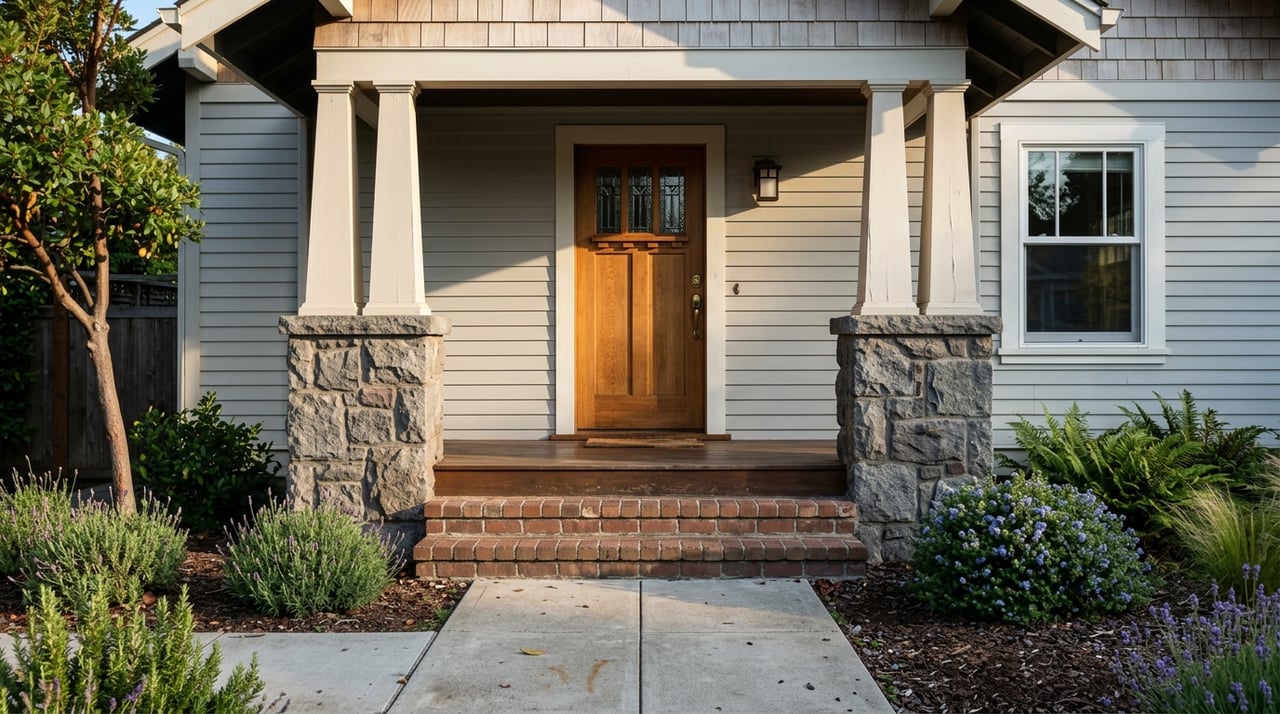
Typical features include broad low roofs, large overhangs, grouped windows, exposed rafter tails, porches, tapered or squared porch supports, and a low horizontal profile. In Alameda, Craftsman architecture ranges from small bungalows to larger custom homes.
How Craftsman homes usually live
Craftsman homes often feel relaxed, practical, and porch-centered. Their lower, wider proportions can make them feel efficient on the lot and connected to the street in a comfortable way.
If you like homes that feel warm and approachable, this style often checks that box. At the same time, Alameda’s guidance notes that bungalow forms do not usually tolerate awkward raising or major vertical rework well, because the porch and low foundation are major character-defining features.
What to know about upkeep
Craftsman homes often rely on wood trim, shingles, grouped windows, porch details, and roof elements to hold their identity. Window type and muntin pattern can be especially important to keeping the style intact.
Siding changes in material or orientation typically trigger design review in Alameda. If you are buying a Craftsman with renovation plans, it is smart to confirm early what exterior work may need review.
Mediterranean and Spanish Revival homes
How to recognize Mediterranean style
Mediterranean and Spanish Revival homes became prominent during the 1920s building boom. In Alameda, the City groups related styles such as Mission, Spanish Colonial Revival, and Monterey under this broader family.
You will often see stucco walls, deeply recessed openings, wrought iron railings, terra-cotta barrel tiles, and Spanish-inspired decorative details. These homes can look quite different from the wood-sided historic homes many buyers first picture in Alameda.
How Mediterranean homes usually live
These homes often feel more inward-looking than Victorian or Craftsman houses. Instead of emphasizing a broad exposed front porch, they may focus more on courtyards, loggias, and recessed transitions.
That can create a distinct sense of privacy and shelter. It also means the home’s appeal is often tied closely to its exterior materials, roofline, and architectural detailing.
What to know about upkeep
Tile roofs are one of the biggest practical issues in this style. Alameda’s residential guidance notes that tile roofs are brittle and matching replacement tile can be difficult.
Stucco and roofing materials should also stay visually consistent with the original style. For buyers, that means exterior repairs may require more planning and better material matching than on some simpler homes.
How style affects renovation potential
Not every historic home offers the same remodeling flexibility. In Alameda, additions should be visually compatible with the original building and surrounding neighborhood, fit the scale of the existing home, and usually be placed to the side or rear when possible.
The City also expects additions to reflect the original building’s window size, roof form, materials, color, and trim. On upper-story work and additions, window proportions, alignments, and dominant materials are expected to match the existing home.
In practical terms, that means a simple Colonial Revival or some Craftsman layouts may be easier to expand modestly. A highly detailed Victorian or tile-roof Mediterranean home may require more careful design work to preserve its proportions and visible character.
A smart buyer checklist for historic Alameda homes
If you are considering an older home in Alameda, it helps to ask style-specific and city-specific questions early.
- Confirm whether the home was built before 1942
- Verify whether the property appears on any local historic resource list
- Ask about past work on windows, siding, porches, and roofs
- Review whether prior exterior changes were done in a visually consistent way
- Ask early if your planned addition, porch enclosure, re-cladding, or window replacement may need design review
- Pay attention to whether the neighborhood has a cohesive historic character that could affect future design expectations
This kind of due diligence can save you time, money, and frustration later. It can also help you judge whether a home is a good fit for your goals, especially if you want to balance historic character with future updates.
Why style knowledge gives buyers an edge
In Alameda, recognizing architectural style is a practical skill, not just a design interest. Victorian, Colonial Revival, Craftsman, and Mediterranean homes each come with different room shapes, roof types, exterior materials, and renovation considerations.
If you understand what you are seeing, you can make better decisions about livability, maintenance, and long-term value. That is especially important in a city where preserving original character plays a meaningful role in how homes are reviewed and updated.
If you are weighing a historic Alameda purchase and want a clear read on property potential, renovation considerations, and long-term value, CCPCA Realty can help you evaluate the opportunity with a practical, hands-on approach.
FAQs
What architectural styles are most common in historic Alameda homes?
- Alameda buyers will commonly encounter Victorian, Colonial Revival, Craftsman, and Mediterranean or Spanish Revival homes, along with other pre-WWII period styles noted in the City’s guidance.
What does pre-1942 status mean for an Alameda homebuyer?
- In Alameda, buildings constructed before 1942 are subject to the State Historical Building Code, which can affect how exterior work and renovations are reviewed.
Do window replacements require review for historic homes in Alameda?
- Significant window changes generally require design review in Alameda, while some minor in-kind or visually consistent replacements may be exempt.
Are interior changes easier than exterior changes in Alameda historic homes?
- In general, exterior changes are more regulated than interior changes, especially for windows, siding, porches, and other visible street-facing features.
Which Alameda historic home styles are usually easier to remodel?
- Based on the City’s guidance, simpler Colonial Revival homes and some Craftsman layouts may be easier to expand modestly than highly ornate Victorian homes or tile-roof Mediterranean homes.
What should buyers ask before purchasing a historic home in Alameda?
- Buyers should ask about the home’s age, historic status, past work on key exterior features, and whether planned changes like additions, siding replacement, porch enclosure, or window swaps may require design review.